Thursday, 30 September 2021

LO2: Distribution in the online age - Terms

1. Download - to download is to copy data from the internet to your computer, this data can make up films or TV shows so that you can watch them offline. Creates a physical copy on your device.

2. Stream - When you stream data you are downloading it and watching it in real time as you download it, this data can be pre-recorded / edited, e.g a live TV show, or actively being produced, e.g streaming a game on twitch. Accessing it so you can watch it live, requires constant internet access. E.g. Youtube, Netflix, Twitch, Amazon Prime, Spotify 

3.Simulcast -  Simultaneous Broadcast - When a show is simulcast it is being broadcasted on multiple channels or services simultaneously, these streams may differ slightly, for example at a different bitrate. E.G Formula One, F1 TV allows for custom feeds off specific drivers whist the main stream is on Sky Sports or sometimes ITV and BBC. Also there is other broadcasts that differ slightly such as commentary in different languages, most of the stream is identical in terms of on screen informational elements.

4. VOD -  (Video On Demand) when viewers can choose what they want to watch, when they want to watch it using the internet. This differs to traditional cable TV where shows where on at specific times.

Ala Carte -> Choice

5. Time Shifting - When you record a live show to a storage medium such as a hard drive, to view later on. Allows you to pause, fast forward, series link a broadcast. Can be viewed multiple times. 

6. Debate - "Fragmented audiences" Livingstone 2002

because we can watch in so many different ways at any time, this means we don't consume media together. Traditional TV is a group activity and with the rise of options such as Netflix or similar we are more "fragmented'  


TV: 

40 years ago: Entirely cable TV, would pay for a TV licence

Now: Can still be viewed on cable TV but also satellite TV, or viewed on VOD services like Netflix or iplayer, all paid for on a subscription based system. Some services like amazon prime you can pay on off for a a TV show.

Film

Mostly viewed at cinemas where you would pay a one off fee to watch the film, also viewed on cable TV with a TV licence. 

Now: Can still be viewed on cable TV and satellite TV, or viewed on VOD services like Netflix or iplayer, all paid for on a subscription based system. Some services like amazon prime you can pay on off for a a TV show. Can also still be viewed at cinemas 

Video Games:

40 years ago: Physical Copies of games, Bought at shops such as Gamestop, Arcades where you would go to play the games

Now: Mostly bought digital copies online e.g Steam, Can still buy physical copies such as CDs 


Magazines:

40 Years ago: Entirely physical and bought at shops

Now: Still mostly physical copies but they can be ordered online, also there is a rise in online magazines viewed on blackbox devices


Radio:

40 years ago: Listen to on actual radios, free

Now: Primarily listened to on the internet on blackbox devices with services such as BBC sounds, still listened to with actual radios


Music:

40 years ago: Mostly listen to with physical copies like vinyl or CDs, bought at physical shops

Now: Mostly listened to with music streaming services such as Spotify or Apple Music, can be downloaded or streamed. Physical copies such as vinyl is making a comeback as well.


KT4: Impact of technological convergence essay: Technological convergence has affected Music, Video games and TV in particular greatly. For example, music has been affected because it has mostly moved online and into subscription based payment. This makes music more accessible but there is a growing number of people who are reverting back to the traditional methods of physical copies such as vinyl. This technological convergence has also allowed more people to create music so it is more accessible as a form of media. It has also affected Video games because they used to be always bought as physical copies but now they are mostly bought as digital copies. There are advantages to this such as less waste with no physical copies being produced and it makes games more accessible as people can buy nearly any game they want as opposed to what is available at the shop. There are also disadvantages such as games not being physical gives less power to the consumer and more to the producers and they don't need to fit games onto cartridges means that game developers are more lazy about compressing their games, this means that games use more space on a hard drive which limits the size of peoples libraries and takes longer to download which is especially bad for people with low speed internet. Digital games can also be sold for less due to the lack of physical production costs which means with good deals games can cost as little as a couple of pounds.  TV has also been affected as well because it moved much more online onto streaming services which means that there are more shows available than ever before which is of advantage to the consumer but they need a constant internet connection in order to watch content, this is limiting for people who live in rural area and have patchy internet. 


KTA 3: Traditional and Virtual Advertising


Task 1:

James Bond - No Time to Die 

Traditional Methods


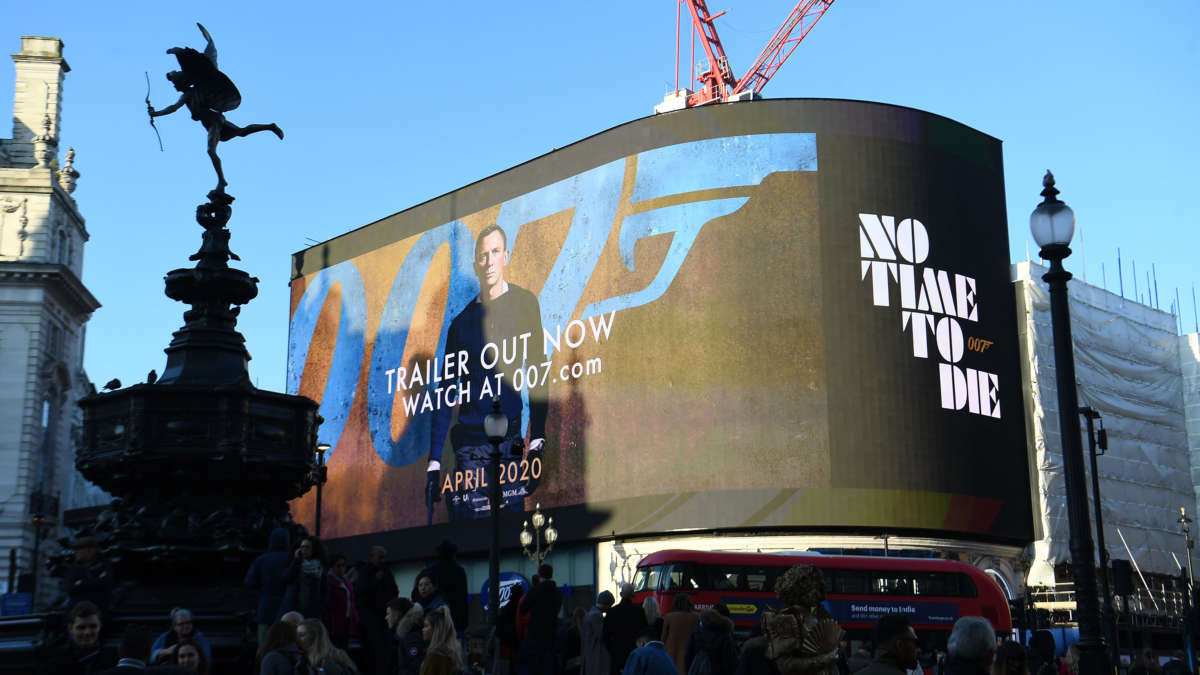
Billboard - London Piccadilly Circus - Advertised in Piccadilly Circus because thousands of people will see the billboard in a day - Also James Bond is a traditionally British film so it will be marketed more heavily in British, but also internationally.


TV trailer - US TV - Marketed on US TV because it expands its target audience to the US - Advertised before NFL because that has millions of viewers so it is being targeted towards a mass audience. Very common above the line advertising. 

Digital Methods


 Social media advert from Instagram,  promotes the film on its release date to a wide audience as many people will be visiting their Instagram account on its release date.  Creates hype by stating that "The wait is over"  which makes the event seem more dramatic.


They also created a hashtag #NoTimeToDie which allows fans to participate in the promotion because it is featured on Web 2.0 which is interactive. This means that the advertising spreads very quickly to a very wide audience which creates hype surrounding the product.


3. The methods work together because the Digital marketing on Web 2.0 mostly targets the digital natives as they are more prominent on social media, this contrasts the traditional marketing which typically targets the digital migrants because they are less prominent on Web 2.0 and will pay more attention to traditional advertising. Combined, this targets a very wide range of audiences which will result in greater viewership numbers and therefore more profits. 

Task 2:


This is a Pop-Up advert for a game production company called "Versus Evil" who are advertising a sale of their games on Steam. It is being advertised on Steam because steam is a games launcher so people who use steam are much more likely to be interested in their products that the average person. 


This is a set of Banner adverts for the marvel comic books that were released in 2012. They are specifically skyscraper adverts which are tall but thin adverts that can fit on the side of a website. They are relatively cheap to buy so they can be distributed to a wide range of people and can also be targeted to their intended audience.


This is the official Instagram account for the TV show Brooklyn 99. It has links to the other social media accounts for the show to increase its distribution. It also includes lots of teasers of the upcoming episodes so that the audience is more excited about it and more likely to watch it.


Task 3:


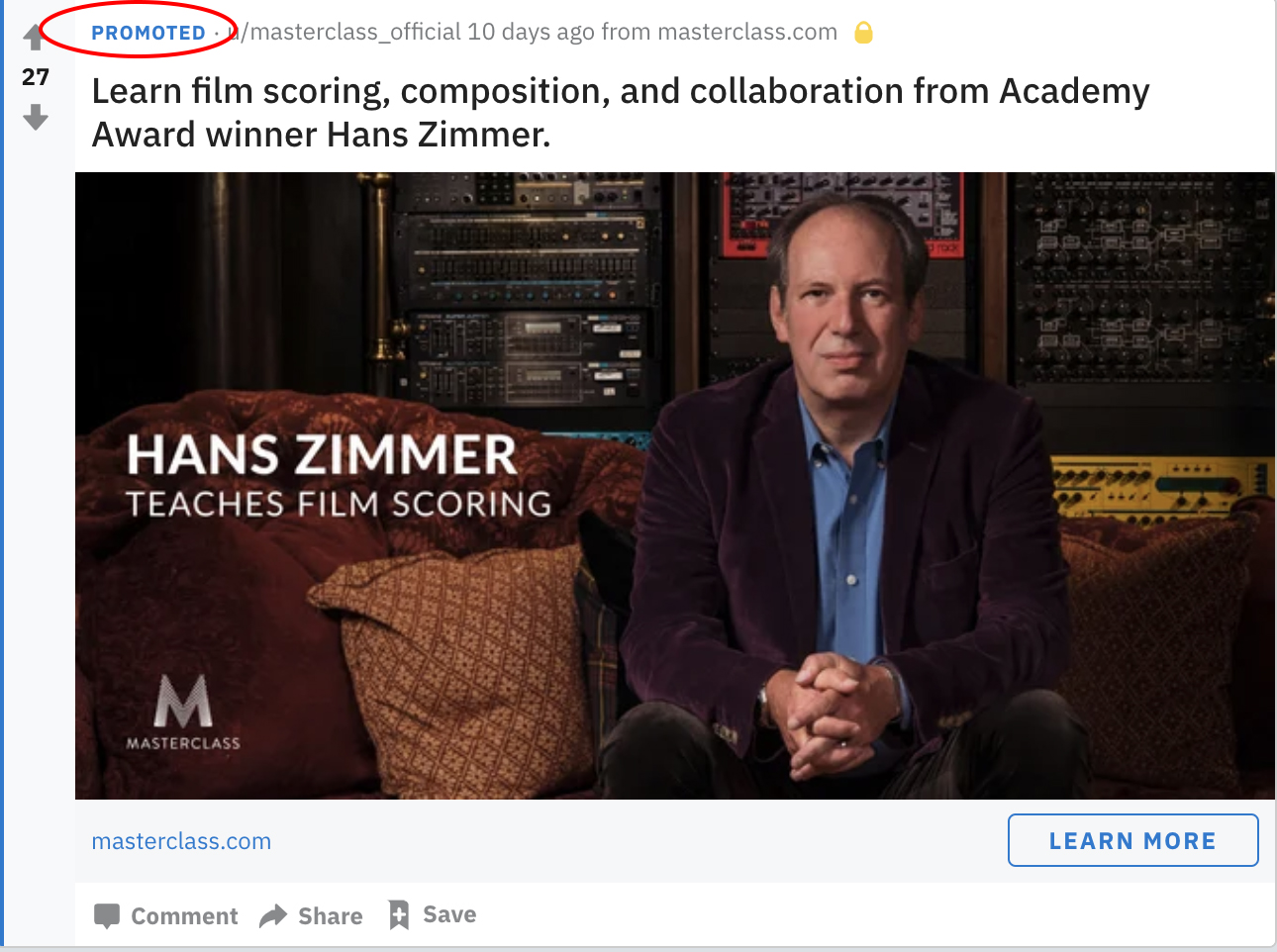
This is an example of below the line advertising because it is being promoted on social media and it is targeting a more niche audience. The target audience would be people interested in learning about music for films which is quite specific audience so the adverts will be targeted at those people with an interest in music. This kind of more niche product will have a smaller advertising budget so they need to use below the line advertising for their adverts to have a large enough reach.


LO2: Traditional and virtual advertising

Traditional Methods

When does advertising happen in Vertical Integration - Between Production and Distrubution 

Traditional Methods: Older Methods, pre Web 2.0

  • Radio
  • Billboards
  • TV
  • Newspapers
  • Magazines
Traditional methods are dominated by conglomerates because only they can easily afford it. Also partly because. they can use their subsidiaries

Advantages:
Can attract a mass audience,
    Conglomerates need a mass audience because they have more mainstream products, allows them to                         
    make massive profits
Disadvantages
Independent companies would find this very expensive to do on a national level. They don't need a mass audience as they products are more niche
       They would use traditional methods but only at a local level such as billboards, local newspaper/
       radio/TV

The only way an independent company can advertise traditional to a mass audience is through a joint venture, eg a conglomerate. 

Digital methods/Viral marketing

Digital Methods:

  • Online e.g Social Media
Advantages
Cheaper
Quicker at reaching an audience 
Easy to target a specific demographic 

Benefits Independent audiences primarily because they don't need subsidiaries to produce and distribute their content, also their audiences are more niche so they can target the correct demographics 

Benefits Conglomerates because it has international reach, 
 

Impact of technological convergence, Web 2.0, Blackbox Theory, Digital Natives

Technological convergence - Different advertising methods combining into one

Multifunctional device/platform e.g

Needed separate devices for games, music, TV, radio. Very expensive

Now we can access a range of media on one device. Smartphone or PC. 

Web 2.0 is the interactive web. 

    Likes, Comments, Sharing, Hashtags, @

Blackbox Theory looks at what different devices we access media on

Digital Natives: Primary younger people, sub 25, who are using Web 2.0 and using blackbox devices

People who grew up with Web 2.0, understand it, expect it

Digital Migrants:  Older people, mid 40s who have had to adapt to Web 2.0 and blackbox devices

Henry Jenkins (2006) "we now line in a convergence culture", Synergy

We are constantly using technology, it is a part of our culture. 

Synergy - Cross promotion on different platforms 

    Easy to do because they can use their subsidiaries for horizontal intergration

Web 2.0 allows independent companies to have synergy


Above the line (mass media/audience) below the line advertising (Personalised/niche/demographic

Above the line: Mass media to attract a mass audience - Traditional advertising - can be done digitally but traditional advertising is more prominent 

Below the line: Target specific audiences, niche media niche audience 


Thursday, 9 September 2021

LO1: Media Ownership

Conglomerate 

Large media company that owns many other companies,
Each segment is called a subsidiaries.
E.G    Pre-Disney 21st century Fox
Subsidiary of 21st Century Fox; Fox, Fox TV, Fox home entertainment, Sky news

They deliberately own subsidiaries that make a range of different media products because then they don't compete with each other, can collaborate (synergy) - more opportunities to advertise, more profit due to many revenue streams, mass audience - many different audiences

when a conglomerate owns subsidiaries that make a range of media products it is said to have, cross media ownership

Vertical Integration - made of 3 steps: Production, Distribution (Advertising and Release to Cinema, Tv etc),  Exchange- make money

Horizontal Integration  - The ability of a conglomerate to distribute their product on different platforms that they own (Services E.G TV channels they own, Radio stations they own, newspapers they own,  game services they own, streaming services they own and things they don't own as well such as Social media, Cinemas and other streaming services although unlikely if they have their own)

Independent  

Has no subsidiaries, not owned by anyone, 
E.G Warp Films -  Independent film company
Product- This is England, Four Lions
Specialise in one media type because they don't have subsidiaries, 
Struggle to distribute as it doesn't have vertical integration so it often works with a conglomerate to distribute - Called a "Joint Venture" Warp Films often works with Channel Four because it has cross media ownership
Warp tend to make "Social Realism" films that deal with real social issues, more niche as it doesn't need to appeal to a wide audience as with a conglomerate


Differences between Conglomerates and Independent 

  • Conglomerates find it easier to distribute because they have subsidiaries with allow Vertical/Horizontal Intergration
  • Mass Audience vs Niche Audience
  • Subsidiaries vs Needing Joint Venture with a Conglomerate
  • Can make more different media types because they have cross media ownership - Have no subsidiaries so can only make one media type
  • Have more infrastructure makes production easier with VI and HI - No infrastructure 
  • Have less freedom with the topics/themes of their products vs Have total freedom over the topics of their products
Public Service Broadcaster

BBC largest PSB in the UK, ITV, Channel 4 and 5 is also a PSB
They have to inform, educate and entertain their audience. 
Funded via a TV license
BBC targets the masses, especially with BBC 1
Channel 4 is more niche, has quirkier shows
BBC has no adverts because it isn't allowed with due to the TV licence, Dave is the only channel with adverts
BBC Products: TV, Radio, Films, Web, Print.   This gives them cross-media ownership

BBC is similar to a conglomerate because it has difference subsidiaries that allows them to use Horizontal intergrations to promote their own products on their other subsidiaries. Also they can use Vertical integration to promote the products whist simultaneously making them that they make and distribute them on their own platforms, such as iPlayer. However they will not exchange because the products won't appear in cinemas and won't cost money if you have a TV licence. 

Production Process
 Radio
Pre-Production- The planning stage, coming up with idea, finding funding, accessing equipment
   Accessing Equipment/Locations  - Recording studios, Microphones, 
   Finding funding 
   Obtaining copyrights for songs
   Scheduling director 
   Script Writer

Production - creation - recording
   Creation of radio idents - Sound Engineers - Musicians
   Recording with personnel
   Hosts
   Guests/Voice Actors 
   DJs

Post Production - Editing, compiling
   Compiling assets, audio editing
   

Film

 PreProduction
   Casting director
   Script writer
   Storyboarding 
   Producer 

Production
    Camera Crew
    Lighting and sound engineer 
    Director of photography

Post Production
    Film editor/s
    Special Effects
    

Magazines

 PreProduction
      Editor
      Graphic Designer - Plan the layout, sketches
      Photographer
 Production
       Graphic Designer
       Photographer
       Journalist 
PostProduction
       Editor
       Graphic Designer 


Unit 1: Exam details

 The aim of this unit is to understand how digital media institutions operative and how their products are distributed to and used by their audiences. This is in order to give you an overview of the digital media industries as a whole.

Exam: January 2022, probably 2nd week,  2 hours long, 80 marks 

Pass- E    Merit-C     Distinction-A


LO1: Media industries

TV: ITV, NBC

Radio: BBC Sounds,  Bauer media - Hallam FM

Film: Disney- Marvel films, Netflix-

Print and publishing: Penguin books, New York Times

Video Games: Valve, EA

Web: Google, AWS

Music: EMI, Sony BMG, 

Tuesday, 7 September 2021

Unit 1: LO6 Be able to evaluate legal, ethical and regulatory issue associated with media products

Unit 1: LO5 Be able to evaluate research data used by media institutions

 So that you know your audience and therefore can produce your magazine to contain content that would apppeal to the target audience                  

Media companies s often expect that mass media products have a large audience reach. This means the product is more likely to be successful and will make profits though sale numbers. However, the main reason that these companies conduct research to find out how many people consume the product within a given reach.

Organisations such as BARB and RAJAR carry this out for companies in the TV and radio industry. Whereas the NRS collects circulation and readership data for publishing and print companies.    

Circulation:

 The number of people who purchase a print product

Readership:

The number of people who read a print product as a part of second hand consumption 

This is an example of readership because someone else may have bought this newspaper (Circulation)  and left it on the bus for this elderly gentleman to read. He did not buy the magazine but is still reading it, plagiarist.  


Audience Feedback

This allows media companies to identify a gap in the market and create a product from this information. Audience feedback is also used to develop an understanding of needs of mainstream and niche audiences. Social media is often used to gain this feedback and usually has a high response rate as it is easy to complete.

Competitors

Research is conducted by media producers to find out what audiences think about the product and brands owned by competitors. BBC and ITV are constantly using online technologies to conduct focus groups about what viewers think about major story lines they have produced. 

Research Methods

Primary - Methods that are conducted yourself, e.g creating and releasing a questionnaire. The methods used depends what media producer wants to find out. 

  • Questionnaires. Consists of a series of question. Open - more verbal long written. Closed- multiple choice.
  • Focus Groups: A group of people assembled to take part in a discussion about a product before it is launched.
  • Interviews: This method is also used in journalism and media reporting. They are a vital part of market research.
  • Online Survey:  Questionnaires that are shared cia the internet. Quick and easy to create.

Secondary - Methods using information that has already been released. For example, using the internet to find out information. Use theorists ideas can help us make informed ideas. 


Internet Research: Search engines are used to gather data, personal opinions, news articles and academic research on a particular topic.

Books and Journals: Textbooks and digital editions of these provide a way of gaining information

Magazines and Newspapers: Articles have been written by professional journalists who have used primary research methods to create data for a topic.

Television: Documentary's,news and factual advice programs can produce large amounts of information needed for research purposes. 


Online Surveys; Primary research method


Strengths: Can easily gather data from a large number of girls in the 16-24 age range


Weaknesses:  Lots of people might give joke responses which would skew the data

Opportunities:  Only send the surveys to known responsible individuals or add an email requirement so that people will have identity attached to their responses

Threats: Data could be skewed and therefore the magazine could target the wrong audience. 


Internet Research: Secondary Research

Strengths: Very quick way to find information about this age group

Weaknesses: It can be difficult to find sources which means that your information may not be correct. 

Opportunities: Only use information that has sources provided.

Threats: Information may be inaccurate and therefore the magazine may be aimed at the wrong audience


Analysing Audience Research

In the industry, the most successful products will often have spin offs and sequels. However, this is based on audience feedback.
Breaking Bad, James Bond both have sequels

1. Constant Updates on what happening, including easter eggs that give viewers nostalgia, 
2. Creating cliffhangers in the story that make a sequel more desirable. 

It is important for media companies to interpret data that is presented to them about the ways audiences consume products in order to make decisions about a product


The Daily Mail- Young Audience, more likely to own a mobile phone and read articles online.
The Guardian - Middle Class, have disposable income to buy newspapers. ABC1 
The Sun viewers cant read so they just look at the pictures

Breaking Bad , they made sequels for breaking bad because it was incredibly popular, one of the most popular characters was Jesse Pinkman so they made a sequel film, El Camino, in order to tie up his story arc. They also made Better Call Saul because Saul Goodman was a popular character with potential to have his own story.


Define "Market Possibilities" 
In terms of market possibilities, the most successful products will often have spin offs and sequels. However, this will be based on audience feedback

Qualitative data, Written word - useful for studies at indivitial data. In depth analysis of how 

Quantitative data, Numerical data, easy to compute/analysis

"The Great British Bake off had 9.15 * 10^6 viewers" Quantitative data as its numerical

"Soap-operas were another genre impacted heavily by the hiatus in production during lockdown"

Qualitative data, worded, not supported by data


Barb: Quantitative 


Rajar: Quantitative 


Nrs: Quantitative 


Mainstream audience: A very large audience of broad demographics

Niche Audience: A smaller more dedicated audience of a more specific demographic

NRS social grade: a grade that determines your class and shows how how much disposable income he has [IMPROVE]

RAJAR: 

BARB:

Demographic: A subsection of a population that can be categorized by a specific characteristic 

Invisible Fiction: A fictional person made by the producers that will make up the exact target audience of the product

Audience Profile: 

Primary Research: Research that you have conducted yourself

Secondary Research Research that someone else conducted and you are using

Quantitative Data: Written data

Qualitative Data: Numerical data


Case Study: Criminal Minds

The show was decreasing in popularity over the years so it was cancelled

Quantitative data, The rating for the show were decreasing which represented a decrease in popularity 


Unit 1: LO4 Understand the target audiences of media products

 Mainstream radio station: Kiss Radio
Kiss radio is a radio station aimed at a younger target audience from about 15 to 35 which is a large demographic due to there being a large number of 15 to 35 year olds. This makes it a more mainstream radio station. Furthermore, it mostly plays pop music which is very popular and appeals to a large amount of people; This helps establish it as a mainstream radio station.

Niche radio station: Landrover owners international

Landrover owners international is niche radio station because its target audience is only landrover fanatics, which is a relatively small demographic. Also it targets a smaller age range since most land rover owners are older because they are expensive and owners needs disposable income. 


If a media product is said to have a mainstream or mass audience it will appeal to a wide range of ages groups and cultures. They are often distributed by larger media conglomerates.  

Due to these factors they tend to make a larger profit due to the wide audience appeal. 

Examples:

 Movies: Harry Potter and Marvel Cinematic Universe, Friday the 13th- Most famous 

 TV: X-factor, BGT,  Stranger Things- Large young target audience, easily accessible on Netflix

Video Games: Minecraft, Pokemon Go, Call of Duty- released annually, accessible on many platforms 

An example of a mainstream media product is a blockbuster film.   Appeal to a broad audience, not made for a specific group. Large budgets to make a large profit.

Niche audiences are often smaller and target a more specific audience (based on interests, skills or beliefs)

Often have a loyal following from their target audiences. 

examples

Films: Juno and Little Miss Sunshine, Die Hard

TV: Modern Family, The Good Place- Unusual topic

Video games: Heavy Rain, Titanfall 2- Unique movement system, Loyal Fanbase


NRS: National Readership Survey - PRINT INDUSTRIES 

    Social Grades. The Social Grades provided by NRS are categorized A-E based on different job roles.      Although these social grades were developed over 50 years ago, the classification provide publishing      and print industries within the UK a means of classifying audiences in a way that is understood by          the majority of future advertisers. ABC1 is grouped together as they are similar, WRITE ABC1 NOT       A,B,C1 


     Print companies would target ABC1,   Mr Reynolds - A   Teachers - B 

RAJAR: Radio Joint Audience Research


BARB: Broadcasters' Audience Research Board

Demographics

Subgroups within a population.

When media producers breakdown their audience based on demographics.

 Age, Ethnicity, Gender, Class Status, Hobbies, Interests, Lifestyles

BBC Radio 1 target audiences; A broad range of young listeners with a distinctive mix of contemporary music and speech, TA is 15-29 year olds and should include some for younger teenagers.

BBC Radio 4 target audiences; Older people, Woman, Higher Educated, Higher social class, Political Interests

The station continues to have a balanced audience in terms of gender 49% M/51% F. The average age of the Radio 4 listeners is 56 years and skews towards an older audience. Our target audience is 35-54 ABC1. It continues to have an upmarket bias with 75% if listeners falling into the ABC1 demographic.

BBC Radio 5: The main target audience for radio 5 is typically younger, because its main subject is sports. This will also mean that the listeners will often partake in the same sports as hobbies, the main sport that is included on the show is football which is more popular with the male demographic. This will result in the radio station having a predominately male audience.


RAJAR - Radio Joint Audience Research

Rajars job is to collect infomation about which demographics listen to the radio, they provide this information to radio producers so they can make produce shows that appeal to the correct audiences

Jointly owned by the BBC and RadioCentre for the commercial sector. They survey over 300 stations, 55 belong to the BBC.


NRS: National Readership Survey

BARB - Broadcasters' Audience Research Board

Barbs role is to provide information about different demographics that watch the TV and provide this information to TV producers to help them create products that are appealing to the correct audiences

BARB is jointly owned by the BBC, ITV, Channel 4, Channel 5 and Sky so they will use the information that BARB provides.

Change for life used it to show the advert to the intended audiences.


This will benefit radio companies because they can target shows at the audiences listening location


BARB:

Which 4 different ways are programs viewed?

TV, PC, Tablet, Smartphone

Which programme was viewed the most on a smartphone, why?

I'm a celebra-tory get me out of here, because it has a younger target audience so they are more likely to use a phone, it has a late showing so more people will watch it on demand.

Which channel had "political" shows?

BBC 1 - The news, Priministerial statement 

Which channel showed "entertainment" shows?

ITV - IACGMOOH - BGT - 

Theory's

Harley believes that institutions produce "invisible fictions" of the audience that allows them to get a sense of who they must enter relations with 


Invisible fiction of the audience of The Rock's spy movie


Denis Mcquil 1987

Uses and Gratifications

4 categories of why people use and interact with media products

Escapism: Media products help people escape reality 

Surveillance: People use media products to help them find information

Personal relationships: Using media products as talking points

Personal Identity: Media products are used as a means of shaping their own "sub cultural identity"


Media Product - Assassins Creed Odyssey

McQuill theory
  
       Escapism- This game is an open world set in Ancient Greece
       This works as a good vessel for escapism as it allows the player to become immersed in the                     ancient world and forget about their own life. 


WEEK 1

 Week 1

Outcomes: Define Audience Terminology ( Mass/Mainstream/Niche)

How audiences are categorized by media

LO4: Understand the target audiences of media products

LO5: Be able to evaluate research data used by media institutions 


LO3: Genre Theory

Genre- Dividing media pieces into categories based on common elements Key Theory: Barry Keith Grant 1995 -     FLASHCARD All genres have sub...